Thomas Schirrmacher
Relevant ProMundis Blogposts

People involved in the five year process leading to the ecumenical recommendations “Christian Witness in a Multi-Religious World”, whom I want to thank

22. Januar 2012 von Schirrmacher · Leave a Comment 

On the 28th of June, 2011, the ecumenical code “Christian Witness in a Multi-Religious World – Recommendations for Conduct” was launched in Geneva as reported in my blog twice (here and here).

At the launch, my introduction to the purpose and history of the recommendations had to be short, as I was the first of fours speakers. Thus the following details had to be skiped, also not to give the impression, that the recommendations were bound to much to specific people. But now half a year later, I would like to offer my personal thank you.

Hans Ucko from Sweden with a PhD from India, programme director of WCC’s Office on „Interreligious Relations and Dialogue“ (IRRD, later „Interreligious Dialogue and Cooperation“, I stay with IRRD) for nearly 20 years from 1989-2008, brought the idea up in one of the yearly staff meetings between PCID and IRRD. This is why I took the liberty to invite him to the launch of the recommendations in Geneva. (see photo 1: talking to Ucko in Toulouse)

talking to Ucko in Toulouse

talking to Ucko in Toulouse

I also wanted to invite Mgr. Dr Felix Machado for the launch, then Undersecretary of the PCID, who traveled to Geneva quite a lot, but he lives a bit far from Geneva. Since 2008 he is back in his native country India, since 2009 as the Archbishop of Vasai.

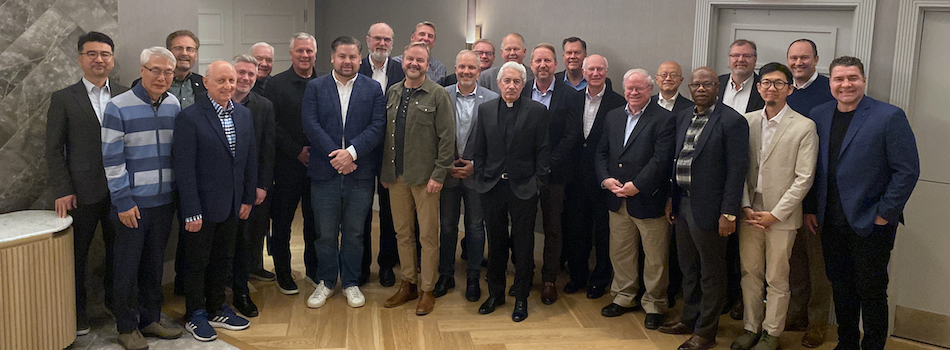
2006 I was invited by the WCC as an expert to a small meeting in Geneva (see photo 2:). It was there when Hans Ucko – with the consent of Felix Machado – invited WEA on behalf of WCC to become part of the process.

the group in WCC headquarter

the group in WCC headquarter

The consultation „Towards an ethical approach to conversion: Christian witness in a multi-religious world“, which was prepared by a small group meeting in Geneva, January [11-12,] 2007, took place as a larger meeting of all branches of Christianity in Toulouse, France, August [8-12,] 2007 with 45 participants. (see photo 3)


The leadership of Hans (Ucko) and Felix (Machado) in Toulouse 2007 is unforgettable! Beside achieving our business, many partcipants became friends across all theological lines. Eg the Catholic archbishop of Nepal became one of my best friends here – I just visted his cathedral recently, which was bombed by Hindu fundamentalists with three young people dying.

After Toulouse, a draft committee of the three bodies involved started to work on the text of the recommendations, following the topics listed in Toulouse. The text was revised again and again in discussion with the leadership and taking in reactions from church leaders from all over the world who got to see the text. Finally the text was taken to a third consultation in Bangkok under the title “Christian Witness in a Multi-Religious World: Recommendations for a Code of Conduct “, January [25-29,] 2011, with 45 high ranking representatives of the three bodies plus church leaders and experts, which had the sole task to discuss and revise the text of the recommendations. After Bangkok, only very minor changes were agreed upon between PCID, WCC and WEA.

The project has stayed on course, while the President of PCID changed as well as the General Secretary of WCC. The responsibility for interreligious dialogue within WCC changed even twice. The majority of the staff on the side of PCID and IRRD changed within the five years. (This is why it came by chance, that at the launch I by chance happened to be the longest one working on the script committee.) This proves that the project was not just a project bound to certain people and their private interest, but was a joint need of the whole Christian community and a result of official cooperation of the largest Christian bodies.

Let me mention some further peoples and names, who were important during the process, even though surely not complete.

I mentioned Hans Ucko and Archbishop Felix Machado already.

Pentecostal Bishop Tony Richie from the USA, representing the Pentecostal voice in the process, is the only person to my knowledge, who visited all three major consultations in Lariano, Toulouse and Bangkok, plus one of the smaller meetings.

The process started under His Emminence Michael Cardinal Fitzgerald and His Eminence Paul Joseph Jean Cardinal Poupard as presidents of PCID. We thank them for their gracious blessings and leadership in the beginning. His Eminence Jean-Louis Cardinal Tauran, from France, became president of PCID in autumn 2007 and without him backing the process and its result on behalf of the largest church in the world, we would not have achieved anything.

Archbishop Pier Luigi Celata from Italy, has ‚outlived’ them all, being the Secretary of PCID since 2002 and thus bringing a lot of stability to the process. He played a major role in the final Bangkok meeting as one of the two chairs.

Later, Andrew Vissanu Thanyaanan from Thailand followed Felix Machado as Undersecretary of PCID. The experts from PCID were a great team: Ms. Khaled B. Akasheh from Jordan and Ms. Denis Chidi Isizoh from Nigeria.

Early 2008, Dr Shanta Premawardhana from Sri Lanka followed Hans Ucko as director of IRRD of WCC. He has been instrumental to ensure that the process would go on even after a major change of staff both in PCID and IRRD. A little earlier in 2007, Ms Rima Barsoum from Syria, became programme executive for Christian-Muslim relations till 2011, and she has been a constant major reminder to us all to view the code with the eyes of adherents of other religions. I am glad, that she attended the launch even so she no longer worked for WCC.

Hans Ucko got Rev Jacques Matthey, programme director of the Commission on World Mission and Evangelism (CWME) of WCC, involved from the beginning, as was Ms Yvette Milosevic in organising the adminstrational side.

In 2009, John Baxter Brown from the UK became consultant for evangelism of the WCC. One of his major tasks was to further the process for a code. He acted as a great bridge builder combining love for mission and love for ecumenical cooperation.

Late in 2010, Dr Shanta Premawardhana left for a new position in the USA and was not immediately replaced. Dr Mathews George, Director of the International Affairs and Public Witness kara from India, had to take over responsibility despite his already full calender of travels etc. In the midst of an incredible work load he guided the last month of the preparation of the text and organised the launch.

On WEA’s side we would have to mention especially Dr Richard Howell from India, General Secretary of the Asian Evangelical Alliance, and Godgrey Yogjahara from Sri Lanka, Executive Director of the Religious Liberty Commission.

From our WEA-side John Langlois from Guernsey, chair of the Religious Liberty Commission and member of the International Committee, and Dr Richard Howell, general secretary of the asian Evangelical Alliance joined me in Toulouse. John’s longstanding experience as a lawyer and a politian, to formulate short and concise texts, was vital to the whole project. In 2010, Dr Rosalee Velosso Ewell from Brazil, joined our team. All participants will not forget her superb ability to write minutes of the discussions and to harmonize proposed formulations.

Dr Geoff Tunnicliffe from Canada, secretary general of the WEA, encouraged and backed the process from beginning to the end and was always willing to deal with critics personally. He used his many connections towards a good end.

The new general secretary of WCC, Dr Olav Fykse Tveit from Norway, was involved in formulating a similar interreligious code in Norway before he took office. He thus backed the finalising of the process and text out of deep conviction and has to be thanked for arranging a fine and successful launch in the hall of WCC.

But beyond all these thanks to finite humans, we thank our Creator and Saviour, the triune God, Father, Son and Holy Spirit, Whom we worship, and whose Holy Spirit has led us to formulate what it means to witness his message of salvation in a spirit of trust, peace and dignity. May He give us the strength to live out what we state and help to admonish wisely those amongst us who still might use unethical means in preaching the gospel.

“An intra-Christian ethical code for missions:
An introduction”

31. Dezember 2011 von Schirrmacher · Leave a Comment 

The following article by a Catholic and a Protestant author was published in German as an introduction to the printed German version of the ecumenical code “Christian Witness in a Multi-Religious World – Recommendations for Conduct” in the journal “Materialdienst” by the Evangelische Zentralstelle für Weltanschauungsfragen (Protestant Central Office for World View Qutesions) of the Protestant Church in Germany. Translated by Dr. Richard McClary [Materialdienst vol. 74 (2011), issue 8, pp. 293-295 (text of the code pp. 295-299)].

Christian Troll SJ, Thomas Schirrmacher

Since 2006 the Pontifical Council for Interreligious Dialogue and the departments within the World Council of Churches and World Evangelical Alliance responsible for the relationship to other religions have worked on an ethical code for missions. Christian Troll SJ and Thomas Schirrmacher participated in the latest consultations in Bangkok, which have led to the recently published results entitled “Christian Witness in a Multi-Religious World – Recommendations for Conduct.” The ethical code is accessible on the internet on the website of the World Council of Churches (www.oikoumene.org).

The question of ethics in missions has in recent years increasingly been asked in intra-Christian dialogue[1] as well as in relationships between religions.[2] However, a political question has also been asked, and that is the extent to which the human right of religious freedom,[3] including the right to public self-expression on the part of religions and the right to religious conversion, may and must be limited by other human rights.[4]

The first consultation in Lariano, Italy in 2006 was interreligious. There, representatives of Christian denominations listened to adherents of different religions. In the end there was a joint avowal of religious freedom as well as an intra-Christian operational program.

When the second consultation occurred in Toulouse, France in 2007, it involved an intra-Christian assembly. The goal was to find a joint direction as well as to establish a problem catalog and a questionnaire. Questions relating to family, school, education, social and medical care, the economy, politics, legislation, and violence were discussed. In the end there was a rough outline for the impending document.[5] A list was made of which means were to be qualified as unethical with respect to missions and were thus to be rejected. Included among them were the use of violence, threats, drugs, or brainwashing, but likewise also providing material advantages or the use of police or the army to propagate a religion. From a Christian point of view, such an ethical code for missions should more precisely label forms of abuse of religious freedom and at the same time not least offer assistance to politians and governments.

A small group of about nine staff members of the Holy See, the World Council of Churches, and the World Evangelical Alliance met regularly in Genf, Bossey, and Rome from 2006 to 2011. As a result, they progressively formulated a recommended text, which in 2010 was sent to various church leaders, member churches, and commissions. Innumerable suggestions were evaluated and incorporated. The entire process was organized by three bodies, first The Pontifical Council for Interreligious Dialogue (PCID), to which delegation archbishops and other church leaders from Asia and Africa belonged, second the Office on Interreligious Relations and Dialogue of the World Council of Churches (IRRD), whose delegation also included representatives of oriental, orthodox, and Pentecostal churches in addition to evangelical church leaders. For the World Evangelical Alliance, the Religious Liberty Commission (RLC) and the Theological Commission were active. Through the inclusion of numerous church leaders from all continents, quick results were not able to be expected.

For the purpose of the third intra-Christian consultation, experts and high ranking church leaders met January 25 – 28, 2011 in Bangkok for the sole purpose of working intensively on the final text. After the Bangkok meeting only minor details in the text were worked out an amended by the highest committees of the three respective bodies through mutual agreement.

All denominations which unequivocally speak out for and advocate religious liberty are interested that within Christianity there are joint discussions about the limits of religious freedom as well as about unethical methods of missions work. In the meantime everyone is aware of the fact that with respect to the questions named there are problems in all confessions and thus in this respect a self-critical intra-Christian dialogue is called for.

Christian witness essentially includes presenting one’s own faith unfeigned to another. However, this is always to be done in a peaceful way and with deep respect for the dignity of other individuals. People who possibly want to become Christians should do this out of conviction and not in a calculating manner. They should have the opportunity to consider their decision and to make it freely and in utter trust in God. All forms of Christian witness and evangelization which do not correspond to these criteria and injure human dignity and human rights in one way or another are to be resolutely rejected as contradicting the good news of Christianity.

The code of conduct at hand does not have a canonical character. Situations in different countries and cultures are in fact so different that short, succinct statements can often not do them justice. For that reason, general guidelines have been formulated for the code.

[Deleted for reasons of space: The code of conduct at hand is in any event an unambiguous indication of the fact that the vast majority of the global Christian community clearly distances itself from every form of missions work that seeks to coerce or manipulate with psychological, financial, or physical might and power. Missions work is only justifiable within the framework of correctly understood religious freedom. It is based on the conviction that it is part of the basic dignity of an individual to be able to decide freely and concretely after careful consideration for a faith or world view one holds to be true and views to be compulsory for oneself. Daily we see people on television who use force or unfair means to spread their religion or at least attempt to do so.]

In its history, Christianity has in multiple cases employed dishonest means and has to be on guard against any relapse into former and abnormal attitudes and behavioral patterns. We thus view it as an extremely welcomed and long overdue sign that Christians now jointly and officially declare, as in the code at hand, that such methods are immoral and unchristian and thus contradict and distort the true sense of mission. Furthermore, they publicly obligate themselves to follow the principles named in the code as well as to allow their actions to be measured by them.

Paul calls upon believers in 1 Peter 3:15-17 to answer everyone’s questions and to clearly defend one’s own “hope,” also towards those who wish us evil. However, they should do this with “gentleness and respect.” People who do not hold to their convictions are not partners for dialog to be taken seriously, but there is a world of difference between peaceful and respectful propagation and a forcible spreading of one’s own conviction which does not respect the dignity of others. Christian witness is not an ethics-free space; it requires an ethical foundation which is biblically based, so that we truly do who what Christ has assigned us to do.

Umbrella organizations have been founded by the Catholic Church, the National Council of Churches, and the National Evangelical Alliance in India and Malaysia. These organizations face the state with a single voice, especially when it comes to questions relating to missions work and laws against conversion formulated to oppose them. Ostracized and discriminated against via unjust laws, Christian confessions do not work against each other but rather with and for each other.

In recent decades there have been developments in all denominations which have made this affiliation possible in the first place. On the Catholic side this began with the Declaration on Religious Freedom at the Second Vatican Council. It awards state power sole concern for the secular public welfare and once and for all rejects the idea of a ‘Catholic state’ as being contradictory to religious freedom. This also includes the dismantling of prior enemy stereotypes and controversial topics between the World Council of Churches and Evangelicals – thanks to an evangelical missiology which has become self-critical and an enhanced status awarded thought relating to missions over against political topics found in ecumenism. In the process, Churches in the south have been leading the way in building a bridge between the camps.

Let us hope that this code of conduct on missions is accompanied by regularly occurring consultations based on the model of the intra-Christian consultation in Bangkok which took place from January 25-28, 2011. In such consultations, Christian denominations should jointly scrutinize their particular conduct in missions work in a self-critical manner. On all sides, what is called for is self-critical, honest, interreligious dialog on questions of current, concrete behavior exhibited by religious groups towards each other.


[1] See Elmer Thiessen, The Ethics of Evangelism. A Philosophical Defence of Proselytizing and Persuasion, Paternoster / Exeter 2011; Pope Benedikt XVI. in his encyclica Spe salvi, 2007.

[2] All codes on mission existing worldwide, secular, religious or Christian, are discussed and compared in Matthew K. Richards / Are L. Svendsen / Rainer Bless, Codes of Conduct for Religious Persuasion. The Legal Practice and Best Practices, in: International Journal for Religious Freedom (Cape Town) 3 (2010) 2, 65-104.

[3] Cf. die international academic consultation at the State University of Bamberg: Marianne Heimbach-Steins / Heiner Bielefeldt (Hg.), Religionen und Religionsfreiheit. Menschenrechtliche Perspektiven im Spannungsfeld von Mission und Konversion, Würzburg 2010.

[4] See the Oslo Declaration signed by all religions in Norway plus experts from the academic field: Oslo Declaration, Missionary Activities and Human Rights: Recommended Ground Rules for Missionary Activities, www.oslocoalition.org/mhr.php (5.7.2011).

[5] The programme is spelled out in the opening plenary in Toulouse: Thomas Schirrmacher, „But with gentleness and respect“. Why missions should be ruled by ethics, short version: in: Current Dialogue (World Council of Churches) 50 (Februar 2008), 55-66, long version under www.worldevangelicals.org/news/article.htm?id=1372 (5.7.2011), German version: „Mit Sanftmut und Ehrerbietung“. Warum die Mission von der Ethik bestimmt sein muss, in: Klaus W. Müller (Hg.), Menschenrechte – Freiheit – Mission, edition afem – missions reports 18, Nürnberg 2010, 97-119.

Download “An intra-Christian ethical code for missions: An introduction” as PDF

Will Europe perish without a Koranic Death Penalty?

20. Dezember 2011 von Schirrmacher · Leave a Comment 

(Translated from my German blog, published there in April 2011)

At a high-ranking meeting of the Organization for Security and Co-operation in Europe (OSCE) on December 9 and 10, 2010 in the Hofburg in Vienna, the OSCE Supplementary Human Dimension Implementation Meeting on Freedom of Religion or Belief, which addressed the topic of religious freedom within the broader framework of human rights consultations, a hushed up commotion took place.

Since Kazakhstan chaired the OSCE, the first keynote speaker was Ms. Iman Valeriya Porokhova, a member of the Russian Academy of Sciences and a leading Russian Muslim (see http://koran-valeria.narod.ru/). The professionally recognized and personally very congenial lady called for peaceful association between religions (albeit only mentioning Islam, Christianity, and Judaism and not one of the represented minority religions, much less secular world views). She held this is possible because the universal principles of the Koran and the Sharia are supported by the Bible and the Torah. She actually mentioned very little on the topic of human rights or the human right to religious freedom.

The longer she spoke, the more her contribution became a sermon with many quotes from the Koran. According to Porokhova, Europe is moving towards its demise because it is no longer following God’s word as found in the Koran, Bible, and Torah. Rather, it is making its own laws. I believe I would have long been cut off by this point.

The climax was reached when she introduced the elimination of the death penalty as a difference between Islam and Europe. It was against the will of God, as it is set down in the holy books, that Europe abolished the death penalty. If this is not reversed, there can be no blessing upon Europe. It has to do with listening to God’s word or giving room to human rebellion. In the process, the speaker blatantly threatened Europe. Apart from that, she at the same time subordinated all other religions to Islam without qualification.

All of the 200 present (ambassadors, religious representatives, experts) remained nobly silent. Also the Muslims present, which in part represent much more liberal approaches, remained silent. Many of the representatives of the media spoke with me about this after the fact, but none reported on it.

I asked myself: What if the Apostolic Nuncio of the Holy See from the UN in Geneva, Msgr. Silvano M. Tomasi, who spoke later, had called for a reintroduction of the death penalty with reference to the Bible? And what if he had otherwise threatened Europe with judgment. Or Msgr. Michael Banach as a representative of the Holy See (as a state) with the OSCE? That would have led to great indignation among the media and, after that, there would have been sharp statements from politicians all throughout Europe that followed.

Or better yet: If I had called for something like that as a representative of the World Evangelical Alliance. I would have possibly achieved the notoriety of the religious eccentric Terry Jones, who burned a Koran. (Fortunately there is nothing like the penal law of the Sharia, i.e., a holy Christian penal law, so that no one can call for its implementation.)

For a long time I have advocated peaceful coexistence between all religions and world views, including Islam. I have often officially met with Muslim leaders throughout the world, not to mention many other contacts and confidence-building measures.

However, I often just stand shaking my head about the double standard with which secular Europe measures Islam and Christianity. In the process, it is precisely secularly oriented people who have everything to lose if such an Islamist view were to become the thing, while Christians neither call for nor promote a thing like that. Rather, on the basis of theological grounds, they justify and help to stabilize democracy, human rights, and religious freedom.

(Addendum, June 2011)

Quite some time after the meeting in Vienna, a written version of the talk has become available and can be found on the official OSCE website: http://www.osce.org/odihr/74621 The talk has indeed been shortened and changed, but one can read here nevertheless:

  1. that for all practical purposes the ideas of religious freedom and human rights are not to be found,
  2. that this was actually if anything an Islamic sermon ending with a collection of verses from the Koran,
  3. that Islam is the only religion not invented by mankind (middle of p. 3) and the sole religion which truly has God in the center (middle of p. 4),
  4. that the talk ends by saying that the Bible has been falsified (p. 6),
  5. that the death penalty must be reintroduced and that adultery, the consumption of alcohol, consumption of pork, and the wearing of modern women’s clothing should be punished throughout all of Europe (p. 5).

An all this in the setting of a major human rights authority and within the context of a symposium on religious freedom!

The Influence of Jewish Fundamentalism on Legislation in Israel

22. November 2011 von Schirrmacher · Leave a Comment 

A threat to religious freedom in the only democracy in the Near East

Overall, national religious political parties currently receive about 15% of the vote. And yet as small coalition partners they have gained an astonishing amount of influence. By law there are an increasing number of Israelis who have to live as the minority of Orthodox Jews envisage, although these individuals in part actually reject the existence of a State of Israel and for this reason are for instance freed from military service. This is all the more astonishing since most Jews in Israel do not share in the following laws. This is due to the fact that they are even more liberal than members of Reform Judaism or only nominally belong to their religion, i. e., belong to the religion for reasons of ancestry. Here are some of the laws which have been passed:

Sabbath law: The Sabbath rest is also being more strictly implemented outside of Orthodox quarters by the state. The airline El-Al is not allowed to fly into or out of the country on the Sabbath. A governmental institute is developing robots able to conduct all types of work on the Sabbath that otherwise would be considered sins for people to do.

Jewish dietary laws: Hotels and restaurants have to pay ‘kosher guards’ who are to ensure that foodstuffs are not offered anywhere which do not conform to rabbinic guidelines of ‘kosher’ preparation or which, such as pork, are completely forbidden. These ‘chaplains’ are found in many areas of society, for instance in the army.

Marital law: Jewish marriages may only be conducted by rabbis, and other religious marriages may only be conducted by representatives of the respective religions. There is no such thing as a civil marriage. That is tragic for interfaith couples, of which one always – at least feignedly – has to change religions.

Law of Return: Whoever immigrates and is allowed to become an Israeli citizen is an issue decided according to strict Orthodox regulations. Reform Jews and especially Messianic Jews (Jewish Christians) are often rejected as non-Jewish. Reform Jewish rabbis are not allowed to carry out religious activities, although internationally Reform Jews represent the largest wing of the Jewish religion.

Medicine: Autopsies and transplants are almost impossible according to law.

Archaeology: Excavations are forbidden where Orthodox officials suspect Jewish graves. Important planned excavations in Jerusalem, Caesarea, and Tiberius are thereby affected.

This progressive takeover of Orthodox Jewish laws in state legislation is primarily being advanced by ‘Agudath Israel’ and the ‘Schas’ which emerged from it, in which the leaders of the Talmud schools (jeshibot) and Hasidic communities set the tone.

German Federal Armed Forces are stationed in the Alsace!

17. November 2011 von Schirrmacher · Leave a Comment 

The announcement shortly before Christmas 2010 got lost in the whirlpool of events. For the first time, a unit of the German Federal Armed Forces has been stationed in the French Alsace. The 600 soldiers belonging to the 291st Infantry Batallion (Jägerbataillon) are sharing barracks with the 2nd French Armored Brigade.

Imagine the long path that Germany and France have taken since World War I and World War II! How good it is when politicians and societies desire peace and solidarity and not war and supremacy. Christians should thank God that he has heard their prayer for peace-loving rulers and pray that war never breaks out in Western Europe again.

Source: http://derstandard.at/1291454831863/Bundeswehr-im-Elsass

Thomas Schirrmacher