Thomas Schirrmacher
Archive

Tokyo 2010

Mai 14, 2010 by Schirrmacher · Leave a Comment 

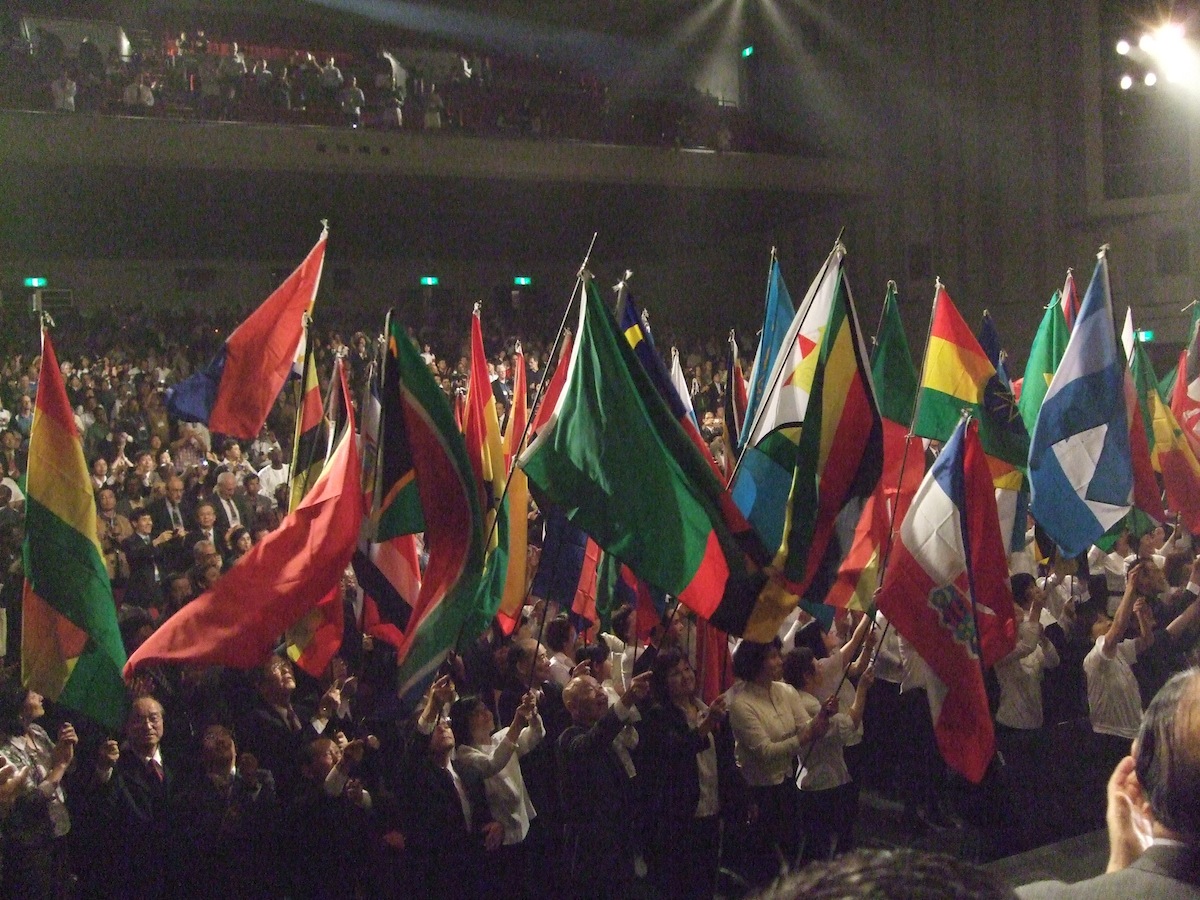
2000 missionary leaders from 140 countries – primarily representing the largest Protestant missionary societies – met for a four-day world missions conference entitled “Tokyo 2010 – Global Mission Consultation” in Japan in commemoration of the 100-year anniversary of the first world missions conference in Edinburgh in 1910. At the same time, the conference was a direct continuation of the 1980 international conference, which under the leadership of Prof. Dr. Ralph Winter I helped organize while still a student. Winter had worked to also organize this most recent conference, but he did not live to experience it [see blog entry at: http://www.thomasschirrmacher.net/blog/ralph-winter-1924-2009-–-rest-in-peace/].

For the first time, the participants clearly reflected the fact that missionary societies from the southern hemisphere have overtaken the traditional sending nations of the west. Missionaries from western countries were in the minority, with the result that the program was determined by Asians, Africans, and Latin Americans. In the following, please find my opening words from May 13, 2010.

Links:

To the delegates of Tokyo 2010 – Global Mission Consultation

Dear sisters and brothers in Christ,

It is a privilege to be together with you. I see you all as a living picture of what the Holy Spirit has been doing in the last 100 years since 1910! In spite of world wars, colonialism, poverty and financial crises, and in spite of secular megapowers like communism or Hitler’s racism, the church of Jesus Christ and world mission have become global as never before. Not, that we do not have a task left, but never before has the approaching fulfillment of the task of world mission been so visible.

You all probably have read the written greeting by Dr Sang-Bok David Kim, the Chairman of the International Council of the World Evangelical Alliance. I bring you personal greetings from Geoff Tunnicliffe, the International Director of WEA, as well as greetings from our Mission Commission (of course several of its members are here anyway), its Religious Liberty Commission and its International Institute for Religious Freedom (as persecution is a pressing reality in world mission today), and its Theological Commission, which I am privileged to chair. As the WEA, we know that a large part of our constituency of approximately 420 million is the fruit of your efforts, the missionaries and mission societies that have dedicated their lives to spreading the good news everywhere.

At 20 years of age, I head the privilege of being involved together with the late Dr Ralph Winter in the planing and organisation of the conference in Edinburgh 1980. This gave my life a new direction. Planting a vibrant church in every people, language, and culture became a central focus. I studied missiology, world religions and cultural anthropology just as my mentor Winter had done. But all this wonderful knowledge about the many cultures in the world only makes sense, if world mission and reaching the peoples that have no church becomes the very heart of theology itself. Theology, that lives for itself, as does much of academic theology in the country where I come from, theology, that does not see itself as an ongoing argument for God’s mission in the world, no longer is a theo-logy, a teaching centered on God, but has become a medium just for the exchanged of human arguments.

I am thrilled that Tokyo 2010 will be the real follow up of Edinburgh 1910: a meeting of mission agencies! And I am thrilled that Tokyo 2010 will overcome the biggest problem that Edinburgh 1910 had – the lack of non-Western involvement. This time, the Global South will lead the way and we definitely need this in the West (at least in Europe).

The more the World Council of Churches is overcoming the idea, invented 50 years ago, of a moratorium of missions, and the more it stresses that mission is an integral part of the  nature of the church, the more it can get back to its roots and claim to be a heir of Edinburgh 1910. And of course Lausanne III or Cape Town 2010 sees itself in the footsteps of Edinburgh 1910 too, and Tokyo 2010 shares the spiritual DNA with the Lausanne Movement and the World Evangelical Alliance.

But I think Tokyo 2010 is the real heir of Edinburgh 1910. Why? First of all for a very simple reason. Edinburgh 1910 was a meeting of those doing mission, of the mission societies and groups helping them, like student volunteer movements and prayer networks. The idea was not just bridging between the churches, but bridging for a clear purpose, namely the mission of the church, and this can only done by the practitioners.

The second reason is: Edinburgh 1910 was about reaching the whole world, but it did not represent the whole world. In Edinburgh 1910 even those parts of the non-Western church, that had vital churches already, were missing and not represented, not to mention other “mission fields”. At Tokyo 2010 it is no longer necessery for Western mission societies to invite representatives from churches in the Global South. Nowadays there are many, many mission agencies from the Global South, and when mission societies are meeting, as they do in Tokyo 2010, the Global South will dominate by numbers. And even the largest older mission agencies today owe their large size to their many members from the Global South. A timely example of this development is WEC International, founded by C T Studd in the heydays of colonialism, which is currently moving its international headquarter from Bulstrode near London to Singapore.

As a European I want to add the last step: Mission agencies from the Global South should bring the gospel back to the secularized countries in the West and help to revive dying churches: “Come over and help us!” Thus the dynamics started by the movement that led to Edinburgh 1910 finally would come full circle!

I pray that we all will be filled by the Spirit. According to Jesus’ words he alone can and will “convict the world of its sin, and of God’s righteousness, and of the coming judgment“. But he has chosen to use us as his messengers. So we can become witnesses to others, yet even more have the privilege to witness his mighty acts before our eyes.

Thomas Schirrmacher

On the stage with the international board

On the stage, with my speech in hand

A Society of Hate

Mai 3, 2010 by Schirrmacher · 1 Comment 

In addition to the newspapers to which I directly subscribe, every couple of hours I go on the internet and look at a number of newspapers and magazines for the newest news stories. Additionally, via a number of keywords Google-Alert supplies me with links to current reports and events.

However, when I read the commentaries and blog discussions under these headings, I shudder. Next to the many subject-specific articles or good-natured use of freedom of expression, I find the most disgusting gutter language, hateful language, abusive language and verbal slugfests. The mist of anonymity appears to allow everything that language can produce. People judge others, about whom only the last commentary on a blog is known, and they come to the conclusion that others are empty-headed, incorrigible, egoistic, or dangerous.

While one anti-discrimination law follows another, the result is that a more respectful – much less more loving – behavior towards others is nowhere to be found. Discrimination appears to be gaining momentum on web discussion boards. In theory, the netiquette for many blogs and media say something else, but in reality bloggers give the evil in their heart free reign.

When a pastor or bishop preaches about the Ten Commandments and holds up a ‘mirror of confession’ in front of people (and in particular when he does not choose words that display respect for human dignity as he certainly has learned), the press jumps all over him. However, measured against the language used in commentaries and blogs, in particular those which are associated with the press media, everything that the pastor or bishop can possibly have said is a friendly piece of advice.

Hundreds of thousands of writers of commentaries do not use the new technological avenues to promote discussion in democratic society and to enable (almost) everyone the opportunity to participate in public discourse. Rather, it enables verbally lashing out at everyone who has a different opinion. Side questions in which one truly can believe one thing or the other become the cause for denying someone their personhood. and in the friendliest case a reason for calling on them to go ahead and emigrate – a well-known form of request in discussion pages and blogs.

Is that democracy, where every person can insult everyone else at will? As time goes by, will the hatred that is shown towards those who think different politically stay in the web, or will it at some point influence the actual daily interaction people have with each other? Can those who watch over the virtues of our country, who are paying attention to political correctness everywhere, but who themselves dish out evil on web discussion pages and blogs fail to address this hatred?

Jesus said in Matthew 24:12: “Because of the increase of wickedness, the love of most will grow cold . . . “ On the internet we are increasingly experiencing how people allow their thoughts free reign, and the absence of law and prohibition is leading to boundless lovelessness which one day could spill over into our democracy. Democracy as a freedom of expression is bid welcome. However, democracy, when it is principally lacking in respect and takes away others’ dignity, is not a political structure that is worthy of human dignity. It is precisely the democratically elected politicians who are role models for hate bloggers and slanderers in the way they speak about each other.

The frequent warnings in the Bible against slander and rumors are indeed age-old, but at the same time they are more up to date than ever. People could by all means simultaneously be committed to the truth and make themselves controversial by being on a search for it, and at the same time through love get along respectfully with each other. See in this connection my essay “Putting Rumors to rest”, chapter 5 in my book “May Christians Go To Court” (Download under iirf.eu).

Thomas Schirrmacher